

 Українська
Causes and Effects of Electoral Fraud
Local elections are to be held in Ukraine in October this year, thus, various illegal schemes, such as ballot rigging, voter bribery and vote-buying with ‘buckwheat’, that directly affect the results of the voting, are likely to occur.
We discussed the issue of electoral fraud with Oleksandr Solontay, an expert of the Institute of Political Education, during the webinar: “Local Elections Fraud: How Can It Be Overcome and Prevented”.

Stages of electoral fraud:
The first stage of rigging the upcoming elections is related to voters’ re-registration at polling stations, which was applied for online at the website of the State Register of Voters. For this purpose, the change of voting address took place without any supporting documentation and proper consideration of applications. Some people have already taken advantage of this: large groups of people from certain communities have registered in different ones for a candidate to gain more votes.
This shortcoming should be taken into account in organizing the future elections since it is already clear what kinds of problems related to changing the voting address arise and what solutions they require so that the fraud at this stage be rooted out.
Oleksandr Solontay further notes that we are already moving on to the next stage of mass violations with regard to the local elections. First of all, this implies violations of the campaigning rules. However, such violations are not electoral fraud per se.
“Fraud means something that distorts people’s choices, that creates a system in which people vote for one thing and get a different one, and that affects the result. Meanwhile, violations are those things that can go beyond fraud; they may happen when an electoral subject fails to know the rules, or when it is simply impossible to conduct elections without committing such violations in a particular environment”, Oleksandr Solontay explains.
Election campaigning is a remarkable example of such violation since it begins ahead of the schedule specified in the Electoral Code. This is a matter of flaws in the legislation, which are, however, intentionally maintained by the electoral subjects, resulting in such conditions, where it is objectively impossible to comply with all the requirements.
Main issues during the election process
The main issue during the election process is vote-buying, specifically, of those voters who do not have definite political preferences. The number of such citizens is directly related to the number of those who have a clearly defined political position and who follow the activities of specific political parties. In order to solve this issue, it is necessary to raise the level of awareness of citizens about the activities of political parties and candidates.
Moreover, vote-buying has a direct link with the turnout at the time of voting. Unfortunately, in Ukraine, during local elections, the percentage of citizens who turn up at the polls hardly reaches 50%. The lower this percentage is, the greater is the likelihood of rigging during the vote count. Voter turnout is heterogeneous, depending on the regions of Ukraine: there is a higher risk of electoral fraud in ‘passive’ regions.
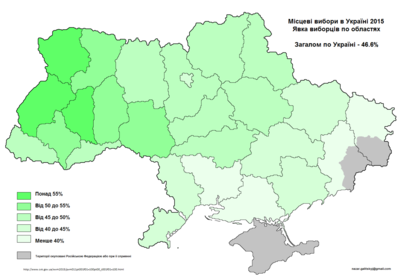
The Criminal Code of Ukraine recognizes vote-buying as an offence in Section V, Article 160 “Bribery of a voter or a referendum participant”. This offence entails the liability from “one hundred to three hundred non-taxable minimum incomes or correctional labour for up to two years, or restriction of liberty for the same period”. Compared to the former provisions on voter bribery, the current version as of 16.07.2020 provides for more severe punishment and is designed to reduce the level of fraud during the local elections. Such schemes as the ‘morning stuffing the ballot box’ can be prevented by means of constant monitoring by the observers at polling stations before and during the election process.
The full record of the webinar with Oleksandr Solontay is available at our YouTube channel:
For reference. The webinars are held in the framework of the Project ‘Set a Policy Line for Authorities’ supported by the National Democratic Institute (NDI).Note. The mission of the “Active Community” is to achieve prosperity through the democratic development of Ukrainian communities. The goal for 2025 is to activate and involve at least 1% of citizens in decision-making and promotion of reforms in Ukraine on a systemic basis for the well-being of Ukrainian communities. The initiative was created through the activities of the “Institute Respublica”. We are working to increase the civil activity of citizens.


