

 Українська
For 4 years in a row, the All-Ukrainian Initiative “Active Community” has been stimulating young people to participate in debates. Young people participate in national debates on political reforms and receive interesting prizes and recognitions. This year, the debate tournament was held in 23 cities of Ukraine in the format of the British Parliamentary Debate on ZOOM platform.

On December 11th, the teams competed in the National Debate Tournament consisting of two rounds and finals.
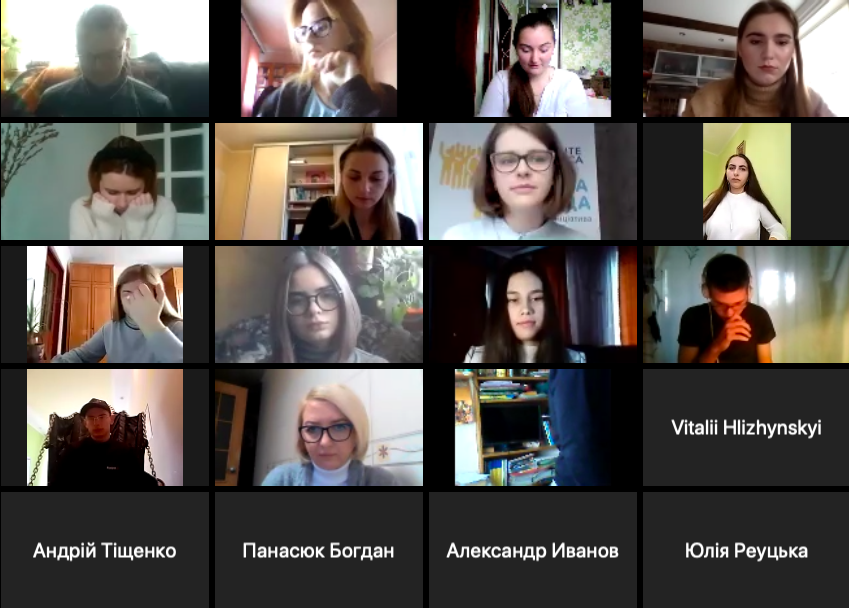
According to Taras Shevchenko, the Deputy Minister of Culture and Information Policy, “the debates are not just about critical thinking. This is also the matter of responsibility and activism”.
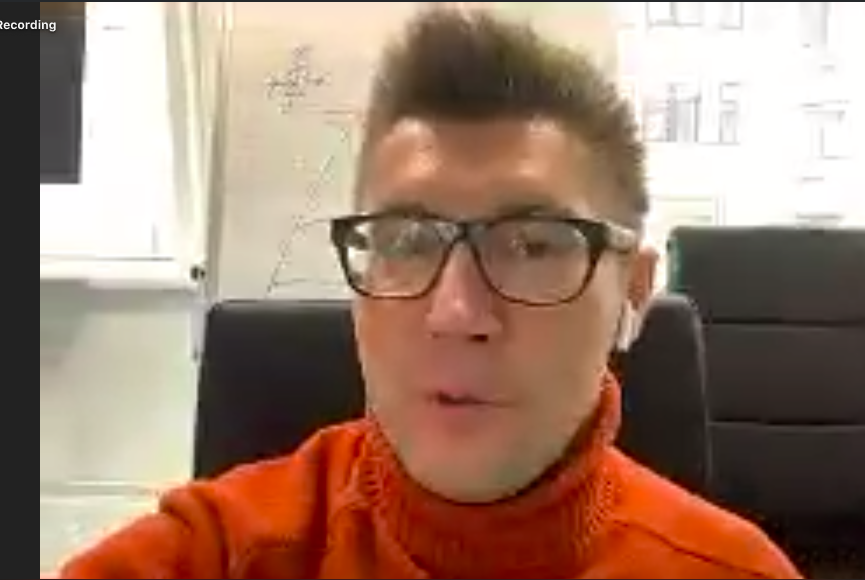
“Being active is wonderful and important. But, in my opinion, it is not sufficient by itself. Responsibility must come first. Activism plays an important role, however, irresponsible activism can even be harmful. It is important to take responsibility for everything you do. I believe that a person is constantly developing and I urge you to be active and responsible citizens,” Taras Shevchenko stressed.

Ian T. Woodward, the resident director for the National Democratic Institute (NDI) in Ukraine, shared his experience of participating in debates and what impact it had had on his life.
“I rejoice at being with you today. I have been attending these meetings for 4 years in a row. I am also young at heart and that is why I am very happy when we have an opportunity to work with young people. I really like debates. This is the thing that prompted me to develop my critical thinking and to work in politics. I would like to share my first experience in debates with you. When I studied at school, I participated in debates. It was mandatory back there. I remember we had to debate on the death penalty in the United States. I was 15 at that time. Back then, I supported the death penalty because I believed that if one had taken someone’s else life, one should be properly punished. Then I began studying this issue thoroughly. And, having researched the issue, after the debates, my point of view changed dramatically. The most important thing during debates is that we learn to form an opinion, to look for the facts, to find out more about the things that are important for society. I adore argumentation, debates, critical thinking. I am grateful to all the coordinators who have worked all over Ukraine. I hope that we would be able to meet for a cup of coffee soon. You always inspire me! All of you are the reason why Ukrainian society remains optimistic. Our opinion polls (polls held by the NDI – ed.) show that Ukrainians keep looking on the bright side of things. This is due to active people who care about their communities, who want to change the world for the better. To my book, this fact alone proves why debates are so important. All of you are leaders already. It is important that you honed all these skills, learned how to form a point of view, convey your thoughts, argue, seek solutions to social problems,” Ian believes.
Mr. Woodward also recounted that it were the debates that induced him to take up activity in the political domain.
“Debates and critical thinking are the things that brought me on the path of political activity. I joined the work at an NGO when I was studying at the university, then I worked for the NDI. One can have one’s own opinion and possess an open way of thinking, but the debates teach to express this opinion correctly, to argue. This led me into politics through the public sector. Why haven’t we gathered in an auditorium now? Because of the pandemic. It has had a terrible effect on the whole world. But this is a year when we have learned a lot of new things. The things that activists do inspire me the most: singing on the rooftops in Bergamo, people gathering all around the world to support each other. How wonderful it is that people can join forces and fight for what’s important. I am very inspired by activists and people like you,” Ian says.
Oleksandra Hlizhynska, the Executive Director of the Institute “Respublica” and a co-founder of the All-Ukrainian Initiative “Active Community”, also shared her experience of participating in debates.
“I started participating in debates in the 8th grade. We were required to prepare a case and counter-case. That is, 2 ways to solve one problem. When, at the school time, I was preparing for debates, it was quite difficult but extremely exciting. By developing the skills to solve certain social problems we learn how to find solutions. These are incredible emotions when we see a certain problem at the community or even at the country level starting to be solved. These emotions and the results that you can get and experience with the team are very valuable. This is what helps the country as a whole to develop. Socrates once said: “To have something, one needs to be someone and do something”. I hope that today’s debates will help you develop your skills further and implement your solutions,” Oleksandra noted.

Maksym Volovych is a debater, the best speaker of the 2017 “Active Community” Debate Tournament. Now he is a member of the Rivne District Council:
“In the 9th grade, I won the Biology Olympiad and received my first prize – 50 hryvnias. It was the time when I realized that I want to earn a living by intellectual work. Unfortunately, not many people really know how to defend their opinion. Debates teach this very well. In my life, debates were an impetus for further self-development. Miracles do happen, but very rarely. It was an inspiration for further actions, for something to be done so that I learned how to speak. Even in everyday communication, every day, we use the wrong phrases, clichés and so on. We need to work actively to ensure that the language is balanced and meaningful, that the information is conveyed in a quality manner,” Maksym believes.
So how did the debates go? The participants of the National Debate Tournament were the winning teams of the regional debate tournaments. The debates were held in the British format.
On the British Parliamentary Debate Format
This format developed in the early twentieth century in Great Britain, with the support of the Universities of Oxford and Cambridge. Today, it is the official format of the World Parliamentary Debate Championship, which is attended by more than 300 teams from around the world. Those teams represent colleges and universities, and the format itself is widely called student format.
The rules of the game are the following:
- Participants are divided into two chambers of Parliament: Government and Opposition. 4 teams are playing: the first Government – the first Opposition; the second Government – the second Opposition. Each team consists of 2 players. The first Government and the first Opposition are composed of: the Prime Minister and his Deputy, the Leader of the Opposition and his Deputy. The second Government and the second Opposition consist of: the Member and the Whip of the Government and the Member and the Whip of the Opposition.
- The Government is to make a motion on the subject of the debate and to convince the judge that it should be adopted. The Opposition is to argue that the adoption of such motion is inexpedient.
- Each player is given 5 minutes for a speech. After each speech by representatives of the Government, the floor is given to a representative of the Opposition.
- During a participant’s speech, a player from the opposite team may pose a question. For this, he is given up to 15 seconds. The first and 5th minute of the speech is “protected”. This means that a speaker cannot be interrupted for questions at this time.
So, in the first round, the participants debated on the topic of judicial reform at the local level – “Whether the Chamber should introduce a procedure for electing judges by citizens of Ukraine”. The topic of the second round was “Whether the Chamber should abolish parliamentary funds at the level of local councils”. In the finals, the teams defended the position “for” and “against” on the topic: “The Parliament should resolve the crisis related to the Constitutional Court of Ukraine”.

The teams “Sisters 2.0”, “Themis”, “Party of Humorists and Dictators”, “The Great Volyn”, “Freedom-lovers” and “Professionals and Economic Men” reached the finals.
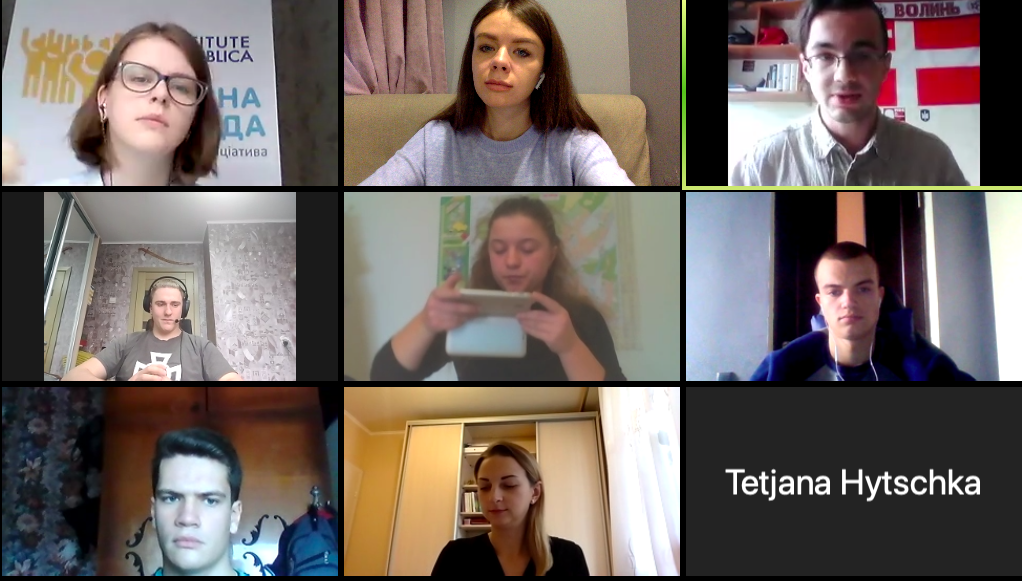
The National Debate Tournament, in the age category “Students”, was won by the team “The Great Volyn” and its representatives: Vitalii Mamets and Volodymyr Fedorets.
The team “Party of Humorists and Dictators” consisting of Andrii Tishchenko and Ivan Kolisnyk took the second prize.
The team “Themis”, where Yana Radchenko and Sofiia Nechyporenko competed, was ranked the third.
In the age category “Schoolchildren”, the team “Professionals and Economic Men” and its representatives Andrii Nikiforchyn and Yuliia Savchyn won the Tournament.
The team “Freedom-lovers” consisting of Yuliia Reutska and Bohdan Panasiuk was ranked the second.
All participants of the National Debate Tournament showed a high level of knowledge and proved to be professional speakers.
“The judging experience is very interesting. The debaters were really great – they were active, interested in reforms and events in the country, citing interesting examples and quotes, and motivating!”, Nataliia Holovach, the judge of the National Debate Tournament and the coordinator of the All-Ukrainian Initiative “Active Community” in Rivne, summed up.
For reference. The event was held within the project “Right of Choice” implemented with the support of the National Democratic Institute (NDI) and with the financial support from the United States Agency for International Development (USAID).
Note. The All-Ukrainian Initiative “Active Community” is an association of people and social movements for self-organization and participation in solving local problems. The Initiative was created within the framework of the Institute “Respublica” activities.
Authored by Tetiana Kavunenko, the head of the press service of the Institute “Respublica” and the All-Ukrainian Initiative “Active Community”


